


Scholae de litteris latinis: courses on ancient, Christian, medieval and humanistic Latin literature, and on Roman daily life
Non […] tam praeclarum est scire Latine quam turpe nescire.
Cicero, Brutus, 140.
In September we’ll continue our series of courses of Latin and Greek. They’ll be followed by other courses courses in January.
For now, you can register for the following courses (which have a limited number of participants):
Latin language: elementary (A1, A2), intermediate (B1, B2, B3) and advanced level (C1.1, C1.2);
Latin metrics: for students at advanced level (C1 and C2);
Ancient Latin literature: for students at advanced level (C1);
Christian Latin literature: for students at advanced level (C1 and C2);
Medieval Latin literature: for students at advanced level (C1 and C2);
Latin literature of the Renaissance: for students at advanced level (C1 and C2);
Caligula: life, death, and propaganda: for students at advanced level (C1 and C2);
Biblical Greek: intermediate level (B2).
How to apply
The applications will close no later than September the 18th, but they might close even earlier if the maximum number of applicants is reached. So apply sooner rather than later!
To apply you must fill out the form at the bottom of the page. Upon receiving the application, you’ll be provided all the details needed to make the bank transfer.
The application will be valid the moment the deposit is received, provided this happens within ten days after the form is sent.
All those who register for two or more of the courses above (for the period September-December), all those who have taken part in at least one course held from April to August 2026, and all those who are under 21 years of age at the time of registration, will receive a discount of 10%. The discounts are not combinable.
ANCIENT LATIN LITERATURE
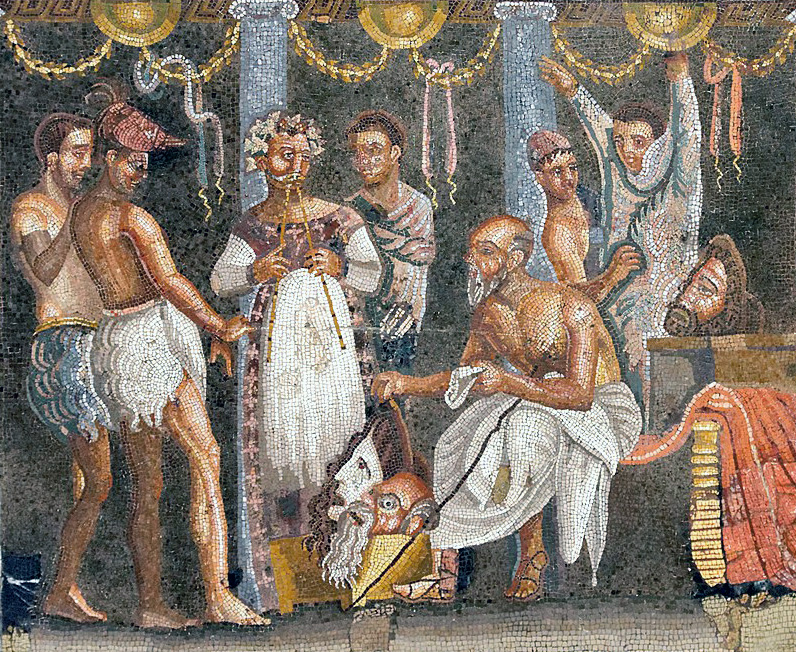
In this course the participants will read some passages taken from Phaedrus, Plautus, Terence, Caesar, Cicero, Horace, Martial and Petronius. We’ll read some relatively easy classical texts, giving students direct access to the authors in a smooth, enjoyable reading experience, unhampered by an excess of erudition. The course is therefore recommended above all to those who have completed the study of the first ten chapters of Roma aeterna, by H. H. Ørberg.
A course tailored for you
The course will be entirely in Latin: participants will listen, speak, read and write. An advanced knowledge of the Latin language is required.
We want everybody to take an active part in our lessons; that’s why, each group will be composed of no more than ten participants.
Dates of the course
The course will be held from the 29th of September to the 1st of December (ten 75-minute lessons: one per week).
All lessons will be held on Zoom, every Tuesday: they will begin at 5:30 p. m., Rome time (UTC + 2).
Should you be unable to attend a lesson, the Schola Latina will be glad to provide you with a video recording.
To help participants to meet and make friends, we’ll form some groups on Whatsapp or similar platforms.
Teaching materials and course programme
Students will need the following books:
– Sermones Romani: an anthology of Latin passages;
– Plautus, Amphitryo;
– Caesar, Commentarii de bello Gallico.
Other teaching material will be provided by our teacher during the lessons.
Teacher
The teacher will be Mr Roberto Carfagni.
Cost of the course
The course costs 175 euros.
All those who register for two or more of our courses (for the period September-December), all those who have taken part in at least one course held from April to August 2026, and all those who are under 21 years of age at the time of registration, will receive a discount of 10%. The discounts are not combinable.
How to apply
The applications will close no later than September the 18th, but they might even close before that deadline, if the maximum number of applicants is reached. So apply sooner rather than later!
To apply, it is required to fill out the form at the bottom of the page. Upon receiving the application, you will be provided all details needed to make the bank transfer.
The application will be kept valid the moment the deposit is received, provided this happens within ten days after the sending of the form.
In short:
Language of the course: Latin
Level of knowledge of the language: advanced (C1 or C2)
Maximum number of participants per group: 10
Date of beginning: the 29th of September
Duration of the course: 10 75-minute lessons, every Tuesday for 10 weeks
Teacher: Roberto Carfagni
Cost of the course: 175 euros
CHRISTIAN LATIN LITERATURE
In this course, we will focus on a single theme that was very important to latin christian writers of various periods: the moral formation of the christian man. Specifically, we will explore self-mastery, the control of one’s passions, and the proper use of wealth and worldly goods.
A course tailored for you
The course will be entirely in Latin: participants will listen, speak, read and write. An advanced knowledge of the Latin language is required.
We want everybody to take an active part in our lessons; that’s why, each group will be composed of no more than ten participants.
Dates of the course
The course will be held from the 30th of September to the 2nd of December (ten 75-minute lessons: one per week).
All lessons will be held on Zoom, every Wednesday: they will begin at 7 p. m., Rome time (UTC + 2).
Should you be unable to attend a lesson, the Schola Latina will be glad to provide you with a video recording.
To help participants to meet and make friends, we’ll form some groups on Whatsapp or similar platforms.
Teaching materials and course programme
For the study of these authors and the important historical issues concerning the early centuries of Christianity, the following textbooks are recommended:
− Moreschini-Norelli, Manuale di letteratura cristiana antica greca e latina, Morcelliana, Brescia, 1999.
− Simonetti-Prinzivalli, Storia della letteratura cristiana antica, EDB, Bologna, 2010.
− Young-Ayres-Louth, The Cambridge history of early Christian literature, Cambridge University Press, 2008.
− Quasten, Patrology, vol. 1: The beginnings of patristic literature, Ave Maria Press, Notre Dame (Indiana), 1983.
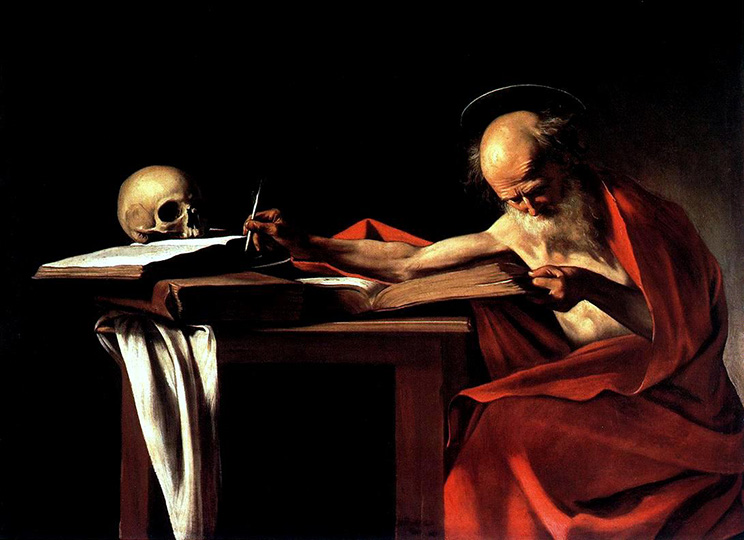
Over the course of our meetings, we will be reading and discussing passages from saint Jerome’s Vita Malchi, Eugippius’s Vita sancti Severini, Clement of Alexandria’s Quis dives salvetur (in latin translation), saint Ambrose’s De Nabuthe, and Lactantius’s Divinae institutiones. All texts and necessary materials will be provided by the teacher. As for critical editions with commentary, these can be recommended by the instructor to anyone who is interested.
Teacher
The teacher will be Mr Luciano Romano.
Cost of the course
The course costs 175 euros.
All those who register for two or more of our courses (for the period September-December), all those who have taken part in at least one course held from April to August 2026, and all those who are under 21 years of age at the time of registration, will receive a discount of 10%. The discounts are not combinable.
How to apply
The applications will close no later than September the 18th, but they might even close before that deadline, if the maximum number of applicants is reached. So apply sooner rather than later!
To apply, it is required to fill out the form at the bottom of the page. Upon receiving the application, you will be provided all details needed to make the bank transfer.
The application will be kept valid the moment the deposit is received, provided this happens within ten days after the sending of the form.
In short:
Language of the course: Latin
Level of knowledge of the language: advanced (C1 or C2)
Maximum number of participants per group: 10
Date of beginning: the 30th of September
Duration of the course: 10 75-minute lessons, every Wednesday for 10 weeks
Teacher: Luciano Romano
Cost of the course: 175 euros
MEDIEVAL LATIN LITERATURE
In this course, we will examine representations of various forms of conflict in selected works of medieval latin literature (from the 6th to the 15th century).
A course tailored for you
The course will be entirely in Latin: participants will listen, speak, read and write. An advanced knowledge of the Latin language is required.
We want everybody to take an active part in our lessons; that’s why, each group will be composed of no more than ten participants.
Dates of the course
The course will be held from the 28th of September to the 30th of November (ten 75-minute lessons: one per week).
All lessons will be held on Zoom, every Monday: they will begin at 7 p. m., Rome time (UTC + 2).
Should you be unable to attend a lesson, the Schola Latina will be glad to provide you with a video recording.
To help participants to meet and make friends, we’ll form some groups on Whatsapp or similar platforms.
Teaching materials and course programme
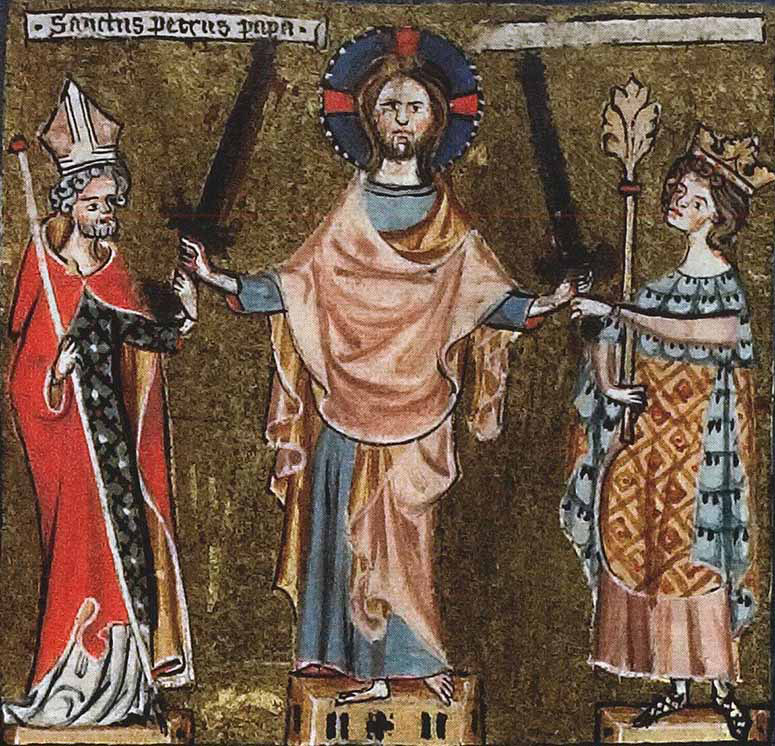
Conflict is one of the fundamental forces shaping medieval latin literature. Whether expressed as war between kingdoms, disputes between rulers and the Church, struggles between different religions, the spiritual combat of saints against worldly temptations, or humanity’s confrontation with the forces of nature, conflict provided medieval authors with a powerful means of interpreting history, morality, and the human condition.
Through readings from historiographical, hagiographical, theological, and didactic texts, we will explore how medieval writers understood political, religious, social, and spiritual conflicts, and how these narratives reflected broader medieval conceptions of justice, authority, sanctity, and divine providence.
Particular attention be devoted to religious conflicts of different kinds, struggles among rulers, the opposition between saints and secular society, and medieval interpretations of natural disasters and other calamities.
During the classes, we will read and discuss selected passages from works such as Gregory of Tours’s Historia francorum, Bede’s Historia ecclesiastica gentis anglorum, Einhard’s Vita Karoli Magni or Nithard’s Historiae, the anonymous Gesta francorum, Thomas of Celano’s Vita prima sancti Francisci, Caesarius of Heisterbach’s Dialogus miraculorum, and other representative medieval latin texts.
All primary texts and supplementary materials be provided by the teacher.
 Critical editions and additional bibliography may be recommended for participants wishing to pursue particular authors or themes in greater depth.
For the study of medieval latin literature and its historical and literary context, the following works are recommended:
– Bentley, Michael et al.: Companion to historiography, London and New York, Routledge, 2006.
– Curtius, Ernst Robert: European literature and the latin middle ages, trans. ard R. Trask, Princeton University Press, 1990.
– D’Angelo, Edoardo: Storia della letteratura mediolatina, Montella, Accademia Vivarium novum, 20041.
– Harrington, K. P.: Medieval latin, Chicago-London, The University of Chicago Press, 19622.
– Leonardi, Claudio et al.: Letteratura latina medievale (secoli VI-XV), Firenze, Sismel-Edizioni del Galluzzo, 20021.
– Loud, Graham A. et al.: The making of medieval history, York, York Medieval Press, 2017.
– Kaeuper, Richard W.: Holy warriors: the religious ideology of chivalry, Philadelphia, University of Pennsylvania Press, 2009.
– Le Goff, Jacques: The medieval imagination, Chicago, University of Chicago Press, 1988.
– Head, Thomas (ed.): Medieval hagiography: an anthology, New York, Routledge, 2000.
Teacher
The teacher will be Mr Jiří A. Čepelák.
Cost of the course
The course costs 175 euros.
All those who register for two or more of our courses (for the period September-December), all those who have taken part in at least one course held from April to August 2026, and all those who are under 21 years of age at the time of registration, will receive a discount of 10%. The discounts are not combinable.
How to apply
The applications will close no later than September the 18th, but they might even close before that deadline, if the maximum number of applicants is reached. So apply sooner rather than later!
To apply, it is required to fill out the form at the bottom of the page. Upon receiving the application, you will be provided all details needed to make the bank transfer.
The application will be kept valid the moment the deposit is received, provided this happens within ten days after the sending of the form.
In short:
Language of the course: Latin
Level of knowledge of the language: advanced (C1 or C2)
Maximum number of participants per group: 10
Date of beginning: the 28th of September
Duration of the course: 10 75-minute lessons, every Monday for 10 weeks
Teacher: Jiří A. Čepelák
Cost of the course: 175 euros
LATIN LITERATURE OF THE RENAISSANCE
In this course, we will look at Renaissance literature about animals.
A course tailored for you
The course will be entirely in Latin: participants will listen, speak, read and write. An advanced knowledge of the Latin language is required.
We want everybody to take an active part in our lessons; that’s why, each group will be composed of no more than ten participants.
Dates of the course
The course will be held from the 1st of October to the 3rd of December (ten 75-minute lessons: one per week).
All lessons will be held on Zoom, every Thursday: they will begin at 7:15 p. m., Rome time (UTC + 2).
Should you be unable to attend a lesson, the Schola Latina will be glad to provide you with a video recording.
To help participants to meet and make friends, we’ll form some groups on Whatsapp or similar platforms.
Teaching material and course programme
In this course, we will look at Renaissance literature about animals.
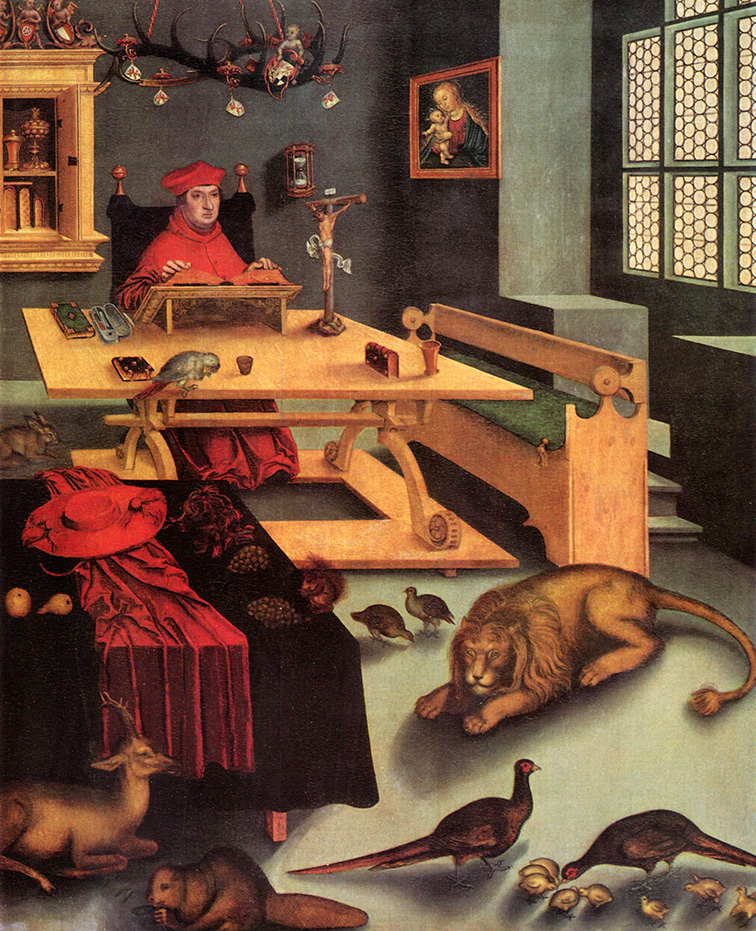
Latin authors of the Renaissance wrote extensively about animals. Some were concerned with the place of animals in the natural order and the question of whether they possessed a soul; others devoted multi-volume works to describing both familiar and unfamiliar creatures of the old and the new world; still others recounted extraordinary legends of marvellous animals, regarding their existence as evidence of the creative powers of God and Nature.
We will be exploring a variety of texts about animals, touching on both science and imagination, discussing philosophical concepts alongside anecdotes, and considering not only familiar cats and dogs but also remarkable creatures that cannot be found in any zoo.
The passages will be provided by the teacher during the lessons.
Teacher
The teacher will be Natalija Čepeláková.
Cost of the course
The course costs 175 euros.
All those who register for two or more of our courses (for the period October-December), all those who have taken part in at least one course held from April to August 2026, and all those who are under 21 years of age at the time of registration, will receive a discount of 10%. The discounts are not combinable.
How to apply
The applications will close no later than Sepember the 18th, but they might even close before that deadline, if the maximum number of applicants is reached. So apply sooner rather than later!
To apply, it is required to fill out the form at the bottom of the page. Upon receiving the application, you will be provided all details needed to make the bank transfer.
The application will be kept valid the moment the deposit is received, provided this happens within ten days after the sending of the form.
In short:
Language of the course: Latin
Level of knowledge of the language: advanced (C1 or C2)
Maximum number of participants per group: 10
Date of beginning: the 1st of October
Duration of the course: 10 75-minute lessons, every Thursday for 10 weeks
Teacher: Natalija Čepeláková
Cost of the course: 175 euros
CALIGULA: LIFE, DEATH, AND PROPAGANDA
In this course, we will look at Caligula’s life and reign through ancient sources, historical facts, myths, and later legends.
A course tailored for you
The course will be entirely in Latin: participants will listen, speak, read and write. An advanced knowledge of the Latin language is required.
We want everybody to take an active part in our lessons; that’s why, each group will be composed of no more than ten participants.
Dates of the course
The course will be held from the 1st of October to the 3rd of December (ten 75-minute lessons: one per week).
All lessons will be held on Zoom, every Thursday: they will begin at 5:30 p. m., Rome time (UTC + 2).
Should you be unable to attend a lesson, the Schola Latina will be glad to provide you with a video recording.
To help participants to meet and make friends, we’ll form some groups on Whatsapp or similar platforms.
Teaching material and course programme
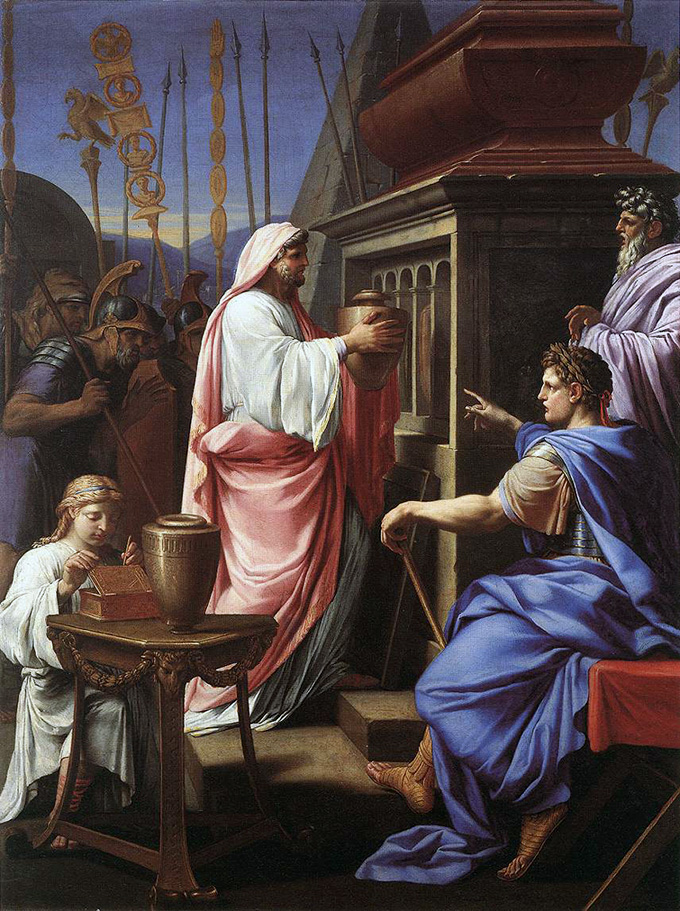
The emperor known to history as Caligula lived for only twenty-eight years, and reigned for less than four; yet his life has become the subject of countless legends – though not the glorious and heroic ones his mother, who was the first to shape the image of the future emperor, would have wished.
Caligula soon revealed his true character, and the ancient historians took over. It is to them that we owe the enduring portrait of an emperor remembered for his cruelty, depravity, and excess, as well as the famous story that he made his horse a senator; a close reading of the sources, however, reveals that the story of the horse is nothing more than a myth.
We will read the ancient sources on Caligula and his circle, examining what they tell us in order to distinguish historical fact from later legend.
The passages will be provided by the teacher during the lessons.
Teacher
The teacher will be Natalija Čepeláková.
Cost of the course
The course costs 175 euros.
All those who register for two or more of our courses (for the period October-December), all those who have taken part in at least one course held from April to August 2026, and all those who are under 21 years of age at the time of registration, will receive a discount of 10%. The discounts are not combinable.
How to apply
The applications will close no later than Sepember the 18th, but they might even close before that deadline, if the maximum number of applicants is reached. So apply sooner rather than later!
To apply, it is required to fill out the form at the bottom of the page. Upon receiving the application, you will be provided all details needed to make the bank transfer.
The application will be kept valid the moment the deposit is received, provided this happens within ten days after the sending of the form.
In short:
Language of the course: Latin
Level of knowledge of the language: advanced (C1 or C2)
Maximum number of participants per group: 10
Date of beginning: the 1st of October
Duration of the course: 10 75-minute lessons, every Thursday for 10 weeks
Teacher: Natalija Čepeláková
Cost of the course: 175 euros
About us
To find out how a host of people, from all ages, felt about our courses, click here.